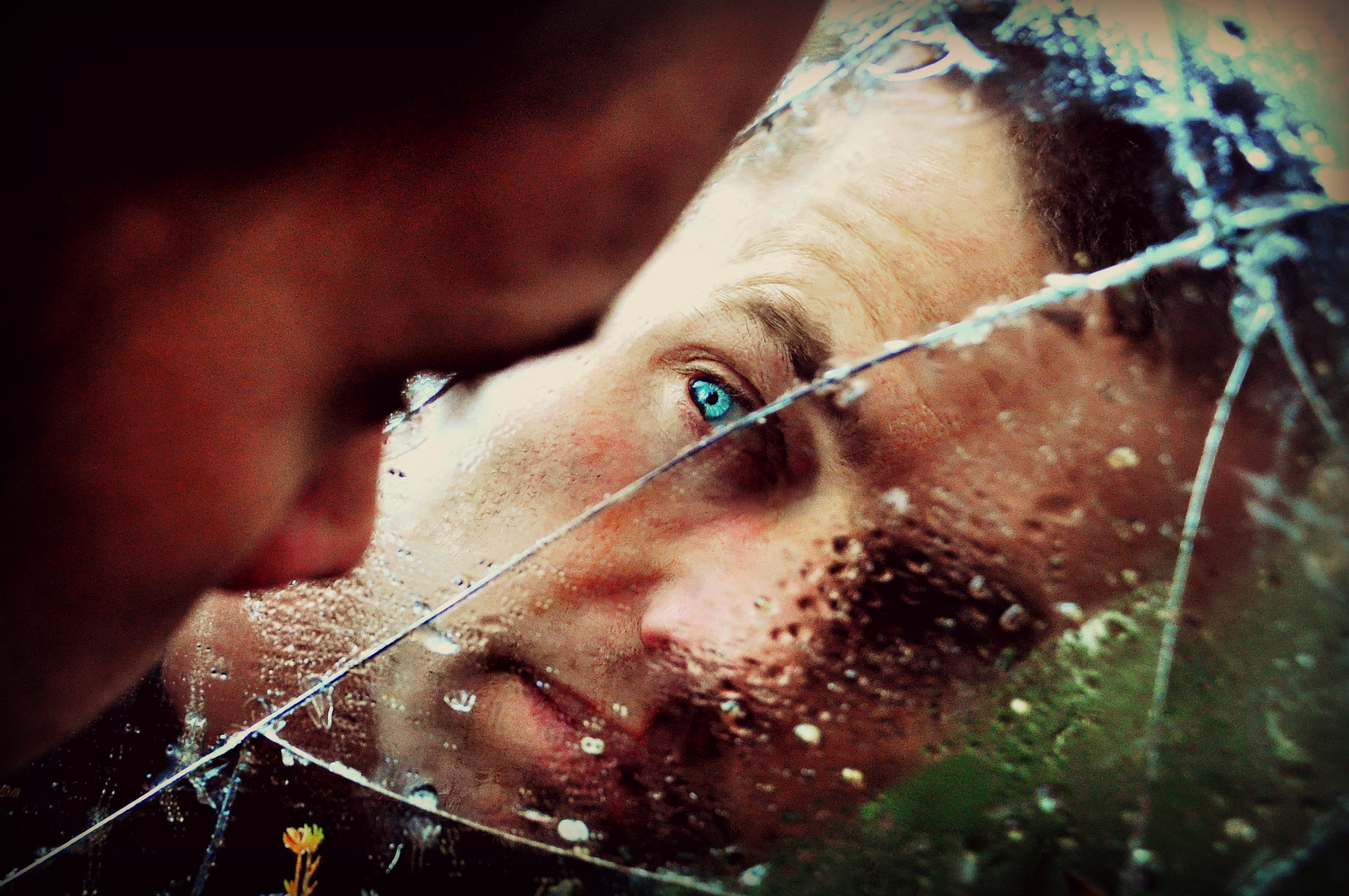
What brought you to this place? It may or may not be the first question that your therapist will ask you, but it is a revealing question that you might ask yourself. What brought you to the place of being ready to begin working on your sex addiction? What brought you to the place of being ready to schedule that appointment, whereas in the past something always held you back or got in the way? Was it getting caught, or was it totaling up the money you have spent on porn or prostitutes? Was it an ultimatum from your partner, or was it the fatigue you have felt from hours of acting out? Was it the fear that this addiction would be your ultimate undoing, or was it the fear that you might lose your children’s respect? My goal is not to shame you, but to help you see that the answer to that question can be a helpful tool.
What brought you to this place? Whatever brought you here—to this critical moment in your life—can also be empowering and encouraging. When you are in a moment of weakness and you are not sure if you want to continue working on your recovery, remember what brought you here. Sobriety is not just about giving up something, but also about gaining something. The impetus that gave you the courage and determination to begin the journey can also propel you forward toward a better life.
What brought you to this place? Sex addiction is ultimately an intimacy disorder. Perhaps in your childhood, your caregivers were not so adept at being there for you, or even worse, were abusive. You did not connect with them in a healthy way, and now you struggle to form the attachments with others that you need. A fear of intimacy permeates your life. You use sexual activity or pornography as substitutes for healthy relationships. Your “drug of choice” becomes a brain-numbing replacement. As Robert Weiss, the sex addiction expert writes, “Sex addicts are looking for controllable sources of getting themselves fed emotionally.” Perhaps you struggle with engaging in the kind of transparency, risk, and vulnerability that lead to secure attachments in your relationships.
What brought you to this place? Whatever your answer to that question may be, let it be the springboard to putting every ounce of your determination into moving forward. Let it impel you to do whatever it takes to find a life that is nurturing, healthy, and whole. You cannot do everything at once. Just take the first step. Give us a call. Any one of us at Bull City Psychotherapy would be honored to work with you as we examine that crucial question together.
If you would like to schedule an appointment with Tim, please call him at 919-533-7907. Or you can e-mail him at tim@bullcitypsychotherapy.com.
For many, the holidays and the start of a new year can be a joyous time. For others, the start of a new year can be a reminder of what we have lost or what we have never had.
For those of us who feel ambiguous grief during the
holidays, here are some tips you can incorporate into your day that will truly
transform how to perceive your life. For starters, it is so important that we
first identify and even write down our blessings or parts of our life that we
feel much gratitude for. I like identifying at least three things I feel grateful
for as I am settling in to practice mindfulness meditation. I do this in a very
self aware and intentional manner, with full attention and imagery in my mind
for what or who I am grateful for. Other people like to keep a daily gratitude
journal. This is also extremely helpful. The process of writing down what we
are grateful for really solidifies the authenticity of feeling grateful for
something specific. And others like to fill a jar or box with gratitudes and
periodically read them for an emotional boost and reality check when we are
feeling down.
I also think it is critical that we allow time and space to actually feel the feelings of ambiguous grief that we may not want to feel. If we have lost someone who is still living, or we are mourning something we never had, such as a loving relationship with a parent, then we need to honor our feelings and allow them to be felt, rather than pushing them away or numbing out with addictions or other distracting behaviors.
For me, I use certain time during my mindfulness practice to be devoted to feeling ALL of the feelings I need to feel, especially the ones that I don’t want to feel. When I do this, my feelings of ambiguous grief do not torment me as much in my daily life at work or with family. I give myself the gift of feeling my true feelings without judgment. There are many other ways you might find work for you to feel your true feelings; possibly with a trusted friend, or a counselor, journal writing, etc.; these are all great, just find what works best for you.
In the end, just because a new year is starting does not mean our feelings of ambiguous grief are simply going to disappear. Grief is a feeling that needs to be honored, processed, and felt. There is no time frame for grief. Grief can also turn into complicated grief or depression, so if you are stuck, then please seek professional help. If you are, however, honoring your true feelings and working through the ambiguous grief, then you are not stuck, you are successfully feeling the hard work of processing grief.
Ambiguous grief may come and go, especially if the person your mourn is still alive, and you see him or her. Anytime we experience loss or negative feelings, our underlying feelings of ambiguous grief can be triggered, and if this happens it is perfectly normal. When you notice you are triggered, practice the tools that work for you, such as creating a gratitude list or calling a trusted friend to share.
If you are experiencing ambiguous grief and you would like to schedule an individual intensive with Dr. Caudle, please email her at Sophia@bullcitypsychotherapy.com.
Ambiguous grief intensives focus on identifying, processing, and moving through grief with experiential work and research based therapies.
Do you view or have urges to view pornography featuring children or teens? Do you experience shame or isolation related to these urges or behaviors? Do you worry that you may be tempted to commit a sexual act against a child or teen? If you are considering seeking treatment, you may find yourself asking some of the following questions:
Why do I do this?
Traditionally, compulsion to consume pornographic images featuring children and teens, and pedophilia in general, has been viewed as a moral failing for which the only remedy is long-term incarceration and/or community ostracism. This approach assumes that the individual chooses to access the content and does not wish to stop. We now know that this perspective is not only inaccurate, but also dangerous in that it offers no hope for those who hope to avoid offending. Most convicted child pornography offenders report they WANTED to stop the behavior, but felt powerless against their compulsions. The pain associated with this powerlessness is immense and sometimes deadly. In fact, research shows that people who struggle with these unwanted urges die by suicide at significantly higher rates than the general population.
Newer research has identified a number of factors that increase the likelihood that an individual will develop a sexual attraction to children or a compulsion to view child pornography. These factors include experiencing sexual abuse as a child, neurological or developmental disorders, learning disabilities, poor problem-solving skills, and even biological conditions such as brain tumors. Some individuals become addicted to adult pornography and are gradually introduced to sexualized images of children. In these instances, child pornography is an escalation of pornography addiction, in part because of the taboo against it.
While we do not currently have a thorough understanding of why these compulsions develop, researchers are continually revealing information to assist mental health providers and sufferers with reducing risk of harm and improving quality of life. Regardless of the causes of one’s sexual attraction to children and teens, it is the responsibility of the individual to seek treatment in order to reduce risks to themselves and their community.
Will treatment work? Am I doomed to commit and act of sexual violence against a child or teen?
There is a pervasive myth in American culture that pedophiles and consumers of child pornography do not benefit from treatment. Current research supports the notion that treatment can help sufferers reduce their unwanted behaviors and urges as well as improve their mental well-being.
Not everyone who is attracted to children becomes a sex offender. In fact, there are vast online and real-life communities of individuals who choose to tackle their sexual attraction to children through treatment and support structures, versus risk harming a child. To learn more about these communities and to read personal stories about recovery, visit https://www.virped.org/
Is it safe for me to talk to a therapist about this?
The fear of being judged or reported to the authorities keeps many sufferers from seeking the treatment they need. While laws vary from state to state, in North Carolina, psychotherapists are not mandated to report clients who disclose viewing of child pornography. In fact, our professional licenses require us to maintain the privacy and confidentiality of our clients, with the following exceptions:
You report that you intend to do harm to yourself or someone else.
You provide written and informed (meaning you know exactly what information will be disclosed, to whom, and for what purpose) to release information.
If you seek treatment outside of North Carolina, take the time to familiarize yourself with the legal statutes surrounding mandated reporting by mental health professionals. Alternatively, you can always contact a local provider directly to ask about mandated reporting requirements before disclosing any specific information.
What will treatment look like?
Treatment typically involves reducing risk factors including stress, social isolation, and substance abuse, as well as developing healthy outlets for intense emotions. You may spend time in treatment addressing traumatic experiences in your past or exploring unhelpful patterns in thoughts and behaviors. Your therapist may refer you to a medical provider to explore pharmacological interventions (drugs to reduce symptoms of PTSD, OCD, or other contributing conditions or to reduce intensity of sexual urges).
What do I do next?
If you live in or near the Durham NC area, Bull City Psychotherapy offers services for individuals who have not committed “hands-on” offenses against children but are seeking help to stop viewing child pornography.
At Bull City Psychotherapy, we specialize in the treatment of sexual disorders, including pedophilia (for non-offenders) and sex or pornography addiction. We understand that seeking treatment takes courage and we strive to provide our clients with the respectful and compassionate treatment they deserve.
To schedule an appointment with Lara, please call the office at (919) 382-0288 or her direct line at (919) 884-7836, or email at Lara@bullcitypsychotherapy.com.
Lara is a Licensed Clinical Social Worker (LCSW) specializing in working with clients who struggle with unwanted behaviors and compulsions, including pornography and/or sex addiction, pedophilia, and self-harm. Lara is also trained and experienced in trauma work. Lara’s approach is heavily influenced by her training in Dialectical Behavior Therapy (DBT), which teaches clients how to fully experience their emotions and manage behaviors through coping skills.
How to get the most out of your experiences (and life).
Quick hits
The anticipation can be almost as great as the thing itself
You are missing out on joy and pleasure if you do not appreciate and reflect on things
We become wired to overlook the positives in our lives. Fight this.
Here are 3 things you should do to enjoy your life more today.
Here’s the thing – we’re wasting so much pleasure. Most of us grind through our weeks and find a couple of highlights to enjoy. Some quality time with someone we love, a cheat meal, etc. Whatever those moments of happiness are, we usually confine them to the moments themselves – and this, dear reader, is the heartbreaking part: we’re leaving 60% of our pleasure on the table.
For the sake of this conversation let’s agree on the following math: 30% of our pleasure comes from anticipation, 40% comes from the event itself, and 30% of our pleasure comes from reflection, otherwise known as the back 30.
Anticipation
Before I focus on the main point of this post (the back 30) I want to focus on anticipation. There have been many studies that indicate anticipation can be almost as pleasurable as the thing itself. I like this article for describing the phenomenon.
The main idea here is that if you intentionally look forward to something, for example a vacation, you can deepen the richness of the experience by reading up on the location, watching movies that feature the location, making a playlist to go with the trip, planning your outfits, planning your meals, etc. Looking forward to the trip can be almost as fun as experiencing it all.
The back 30%: Active Reflection
So, you spent all this time training for your 5k. You researched a training plan, bought some running gear, picked a race, trained like crazy, and crushed it! What an experience! The training was liberating. You did things you weren’t sure you could do. You pushed through pain. The energy on race day was unlike anything you’ve been a part of before. The pride immediately after was special.
Then what? Did you let the experience die there? Did you immediately start planning the next one? If so, you left 30% of your joy on the table.
You accomplished something wonderful! Take a little bit of time to acknowledge that! Think about a way that’s meaningful to you and soak up that back 30! Maybe it’s a great steak dinner with dessert. Maybe it’s a framed case for your certificate and medal. Maybe it’s a thank you note to your partner for watching the kids all those hours you were out slogging through training runs. Whatever it is –this reflective activity will deepen the richness of your experience and help you tap in to that back 30% of joy to be had.
Here are some more ideas and suggestions:
A Shutterfly/memory book to finally organize those pictures from that great vacation
A thank you note to a friend/family member/parent who helped
you with that favor – tell them what it really meant to you and what it allowed
you to accomplish.
A new portfolio, brief case, or outfit in honor of that new
job you got last year.
If you’re not sure where to start, make an “Accomplishments in the Last Year” list. Our weekly routines wire us to forget all the great things we’ve done so we can move on to whatever is next on the list. Take a break. Take a breath. Intentionally reflect on how great you are and how much pleasure you are forbidding yourself to experience by moving on so quickly.
This week
Pick 1 thing from your past and brainstorm how to tap into
the back 30% of joy you left sitting on the table.
Pick 1 thing you did today that you did not fully relish. What can you do right now to get the most out of that experience?
Pick 1 thing you’ll do this week. What is something you will intentionally do to make sure you don’t waste the back 30?
Take stock of how rich these experiences become and how your pleasure deepens as you tap in to this reflective gratitude. I’m going to go reward myself for writing such a phenomenal blog post.
Thanksgiving is a holiday where we are reminded to count our blessings and be thankful. However, for many of us it is a reminder of who we have lost and what we do not have. If we have lost a loved one who is still living, and we feel grief or sadness still, then we are possibly experiencing ambiguous grief. Ambiguous Grief is the feeling experienced when we lose a loved one who is still alive. This can be due to divorce, diagnosis, disclosure of traumatic information, or change of a relationship.
How can we feel thankful if someone we love is no longer in our lives, but still living, and we miss them terribly? How can we feel thankful if our loved one has a mind altering diagnosis, such as Dimentia or Alzheimer’s, and they are not the same person we used to love? How can we feel thankful if we recently discovered that our life partner has spent most of the retirement savings, in an investment that he/she never discussed with us? These are just a few examples of how ambiguous grief can present in our lives. And expanding upon the original definition, ambiguous grief also applies to the awareness of what we never had, yet we knew we needed, such as loving, healthy, or safe childhood.
Yes, it is very painful to experience loss, regardless of the cause. However, after a loved one passes, we do not hope they will return, because rationally we know that they will not, and with ambiguous grief, during the holidays especially, we might still hope that our living loved one might return to our former relationship.
How can we move through ambiguous grief and still feel thankful during this holiday season? First, it is so very critical to be mindful and stay in the present moment; meaning make efforts to keep your focus on this day, rather than the days of the past. This takes practice, but if you practice Mindfulness Meditation, your mind can learn the practice of staying in the present rather than looking backwards, or being preoccupied with preparing for the future. Staying in the present moment can help us appreciate what we DO have. Notice the small things that the present moment can offer you, such as, food to eat. How does each morsel and bite taste in your mouth? Next, notice and appreciate the people you are sharing your time with, whether they are family, friends, strangers, or a ‘chosen family’. Notice them for who they ARE. Appreciate them for their uniqueness, and most importantly, appreciate them for sharing their time with YOU. Try to appreciate your loved ones as they are, and try not to make assumptions about who you think they are based on your ambiguous grief. Finally, be thankful for YOURSELF. You are the most important person in your own life, and as such, you can be thankful for simply, being. Try writing a gratitude list for what you notice and appreciate in your present moment awareness.
However, keeping your mind in the present also means acknowledging any ambiguous grief that you may be feeling, and allowing the feeling to be felt. This is so important, because ambiguous grief needs to be felt in order for us to move through it. Notice I said ambiguous grief needs to be felt, not obsessed about. There is a difference between feeling and thinking. A feeling is something that we can feel inside our bodies. If we start engaging the brain and think about what we are feeling, then that feeling can turn into anxiety, and then our thinking evolves into obsessing and ruminating. When this happens we are not staying in the present moment. It is important to find a safe way to feel your ambiguous grief. You can plan this in many ways, such as with a friend, with a sponsor, with a counselor, in a support group, or by writing in a journal, during meditation, or by creating a personal ritual that represents you moving through your ambiguous grief.
So, yes we can feel thankful even if we are feeling ambiguous grief. In short, we can do this by focusing on the present moment and noticing the small gifts we have, even while acknowledging the grief we may still feel.
Eighty million a day. That’s how many visitors Pornhub.com draws. And that’s only one adult site—albeit the largest one. Any teenager with a laptop or smartphone can access a continual stream of adult material, and parental controls usually do not filter all the content. So, how is pornography affecting those who are growing up with it?
Let me say first that my perspective as a therapist is not to laud or condemn adult sexual activity that is consensual and legal, but to provide compassionate help for those who experience an addiction to it. People are not able to grow and change when they feel judged. As a therapist, I also seek to understand what effect porn has on the general population, particularly on children and teens who may be viewing it for the first time.
The number of young adults who come to our office seeking help for a pornography addiction is increasing. It’s difficult to determine the age at which young people are seeing it for the first time, but estimates range between 10 and 14 years old. Some children are exposed as early as 7—usually by accident or by a sibling. That first viewing is often a mixture of captivating, disturbing, and confusing to young children.
Over the years, mental health professionals have noted a “classic” correlation between sex addiction and childhood trauma; however, because of the widespread availability of pornography, a “contemporary” form of addiction to porn has appeared which does not include sexual acting out (Riemersma, J. Sytsma, M. 2013. A New Generation of Sexual Addiction. Sexual Addiction & Compulsivity, 20:306-322).
The porn addict may intend to spend only about 15 minutes looking at porn, but then 2 or 3 hours later, he or she is still transfixed by it. School performance can suffer, as well as relationships, social groups, and other nurturing activities. Watching porn may become a closely guarded secret—out of shame for the types of porn being viewed, out of embarrassment for the frequency of viewing, because of religious injunctions, or any number of other reasons. Over time, porn viewing can become a shameful secret, and the problem with shameful secrets is that they tend to drive us into disconnection—away from healthy, supportive relationships. Many addicts live a life of compartmentalization—a respected image on the outside and a shameful secret on the inside.
For teenagers, but also for some adults, there can be confusion over what “real” sex is like. The women in the videos seem to enjoy or even prefer being slammed against the wall; the men in the videos are well-endowed and seem to be able to perform with total endurance for hours. The young porn viewer may wonder, is this what women want? Is this what is expected of me in bed? Real-life sex can have its own excitement and beauty, but it’s important to realize that, at times, it can be awkward and emotionally complex. The nurturing, caring side of real-life relationships can be discounted or misunderstood because of the virtual world of porn.
Most pornography addicts come to a place where they realize they can no longer afford to be continuously swept up in another cycle of binging on porn. I provide non-shaming, compassionate help to those whose activities have become out of their control. I do not guilt clients into changing their behavior, but I help them use their own desire for change to move forward to the life they want. I also assist them in seeing their own strengths in the recovery process. It’s important to provide practical resources, not just theories. The client is in control of the speed at which we move through therapy, and if something isn’t working, I’m happy to try a different method.
As you, the client, get more stable in sobriety, we start to peel back the layers of the onion so that you can understand why you have been addicted to pornography or sex. Your life will start to change; you will feel differently about your relationships, your work, and yourself. Your path to healing starts with a phone call or an email. Contact me today to set up your free 20-minute phone consultation. Help is just around the corner; you don’t have to do this alone.
If you would like to schedule an appointment with Tim, please call him at 919-533-7907. Or you can e-mail him at tim@bullcitypsychotherapy.com
In my current exploratory research into ambiguous grief, it has become very clear, very quickly, that there is another type of grief that is just as important as the four previously identified types of ambiguous grief: Divorce, Disclosure, Diagnosis, and Death of a Relationship. This 5th ‘Big D’ is Disappointment.
Remember when Harry Potter gazes into the Mirror of Erised? His own parents gaze back at him adoringly–the same parents who gave their lives to protect him from the evil Voldemort. But Dumbledore warns Harry that some people have been so captivated by the mirror that they literally cannot walk away. The mirror is terribly alluring because it reflects the viewer’s deepest desire. Erised, by the way, is ‘desire’ spelled backward.
In a similar way, addicts can be lost in the gaze of the unreality of porn–by unresolved issues that are a reflection of their deepest desire. As Dr. Patrick Carnes writes, “Gazing at the fantasy is like pouring water into a bottomless glass. It never fills. In this way our addiction is an ally to the self, protecting some truth we wish not to face” (Carnes, Facing the Shadow). Our core issues can be related to childhood trauma, guilt over something we have done or failed to do, or a tendency to compartmentalize our feelings with unreality, to name a few.Read more Why Now Is the Time To Face Your Porn Addiction ›
When we lose a loved one, and they are still alive, it can obviously be very painful. When our loved one is still living and we are not with them, sometimes we have difficulties accepting the current situation.
If you have ever experienced symptoms of anxiety or depression, you may have considered taking a psychiatric medication. Perhaps, an antidepressant has been recommended. Maybe you are already seeing a therapist to help with these symptoms and the therapist has suggested you consider medication. But you don’t want to take medication. Or maybe you want to know more about them before you start a new prescription. Read more Should I Take Psychiatric Medication? ›