
Grief and the COVID-19 Pandemic

By Sophia Caudle, PhD

The COVID-19 pandemic has triggered everyone all around the world at the same time. The most common feelings that people are reporting are fear, anxiety, and loneliness, oftentimes with no clear pathway to feeling grounded again due to the uncertain nature of the pandemic’s timeline. Unacknowledged grief is also being triggered for most people during the pandemic. For example, a 22 year old male client has been experiencing flare-ups with his OCD, and his generalized anxiety and sex addiction have been triggered since the beginning of the pandemic. However, after guiding his therapeutic work into his deep, original grief, which he describes as not feeling connected or nurtured by his parents, he is now more effectively understanding and processing his grief, and his symptoms referenced above have drastically reduced. I have seen this pattern with many clients who experience reduced daily triggers after digging deep into their original grief work.

When grief is triggered, especially when we are unaware of our grief being triggered, it can create an intensity attached to the feeling we are currently identifying, because it traces back to our original grief. Original Grief, copyrighted by grief researcher and psychotherapist Sophia Caudle, is the perceived awareness of our earliest emotional woundings©, and when this gets tapped into, whatever we are currently dealing with seems exponentially more severe. Original grief typically is formed ages 0-5, when we are most vulnerable to being shaped by life’s circumstances. The foundational emotion attached to the pandemic is grief, and grief, if not acknowledged, felt, and addressed, will continue to trigger the more easily identifiable emotions such as fear, anxiety, depression, and whatever other feelings and reactions typically present for people in a crisis. The COVID-19 pandemic is a perfect example of how understanding the different types of grief, especially original grief, can be helpful to us when we experience current daily triggers, because our deep grief awareness can better inform the tools we implement to ground ourselves.

The most easily identifiable grief the COVID-19 pandemic is creating for people is traditional grief. Traditional grief is the grief we feel when someone dies. Traditional grief, for many of us, is the only type of grief of which we are aware. Most of us are only aware of acknowledging grief for ourselves or others in the event of death and dying, and the biggest fear about COVID-19 is the fear and possibility of getting sick and that either we or a loved one will die. According to the COVID-19 tracking website Worldometer, as of September 2020, almost 188,000 Amercians have died from COVID-19, and there have been approximately 664,000 deaths around the world, excluding the United States. When we see the numbers of COVID-19 related deaths around the globe, it is easy to become overwhelmed by fear and anxiety. It is also easy to think if we or a loved one contracts COVID-19, death is inevitable.

Another type of grief that is widely prevalent during the time of COVID-19 is ambiguous grief. Ambiguous Grief© (Caudle, 2018) is the grief felt when a relationship ends or when we lose a loved one in our life who is still living. Ambiguous grief is also felt when we lose something important to us, or when we have the awareness of something important we never had. According to Pauline Boss, the principal theorist of the concept of ambiguous loss, the grief felt by ambiguous grief can be ongoing because there is no closure as there is in traditional grief. During the pandemic, ambiguous grief has certainly been ongoing for many of us. Most of us have lost relationships, lost in-person connections, and lost our ability to move around our communities. Most people do not realize the primary emotion being triggered is ambiguous grief, and typically, if we do not know what we are feeling and where it comes from, then we can not effectively address it. Instead, people may believe they are feeling anxious, scared, or lonely when in reality their deep grief is being triggered and the felt awareness is anxiety and fear. Also, since there is no real sense of when the pandemic will be over, and there is no sense of a projected closure date, ambiguous grief is constantly present and creating ongoing insecurities for many.

There are many types of ambiguous grief being triggered by the pandemic. The ambiguous grief I am seeing most is the grief felt from the loss of daily interactions with others due to physical distancing. This has created a sense of feeling isolated and lonely for so many people. So, many of us are feeling ambiguous grief due to the loss of in-person relationship interactions. The interactions we are missing can be either significant relationships or random interactions with people we do not know well at all. For instance, a simple conversation with the checkout person at the grocery store or a simple chat with a stranger in a park can serve as a type of spontaneous connection, and for many of us, these interactions are not occurring. Live human interaction is sorely missed during this time, and our brains are noticing the loss of connection. As John Bowlby the renowned attachment theorist acknowledged, humans are hard-wired to connect, and the pandemic has removed person to person connection for many people. Some people who live alone or are in other isolating living circumstances have not had a face-to-face conversation or felt a hug from another person in five months or more, and this is tapping into their deepest sense of original grief aloneness. For instance, my client Charles has not left his apartment in over eight months due to his fear around COVID-19 and his other health concerns. Charles lives alone and has not attended in person Alcoholics Anonymous meetings since the pandemic began. Charles has also not experienced human touch in over eight months, and he describes feeling the effects of that unfortunate reality as ‘constant loneliness and depression’. Charles is experiencing deep grief around the loss of his ways to connect with others in a face to face manner.

Another type of ambiguous grief most of us are feeling is the sadness around the loss of our ‘normal’ way of living life. For example, leaving our homes to go do anything; grocery shop, work, school, spiritual gatherings, and socializing are all activities we used to be able to do without thinking about our health being in jeopardy, and now either these ways of living have been stripped from us, or we must prepare for our safety in order to do them at all. So many regular activities have been lost to us since the onset of the pandemic: marriages, funerals, graduations, birthdays, going away celebrations, sports, competitions of most kinds, and many types of intimacy. Most of us took many of life’s daily activities for granted before the pandemic. Now we are feeling ambiguous grief because much of what we used to do is not possible at this time. We are feeling a loss of our freedom to connect and move about in society.

Physical distancing during COVID-19 has forced us to learn how to have intentional connections with others rather than spontaneous connections if we want to feel emotionally healthy as well as maintain healthy relationships. Intentional connections during COVID-19 are exactly what they sound like, ways of meeting with others that we discuss and agree upon as related to social connection, safety, and virus prevention. So, rather than communicating and deciding what fun activity we are going to do, we are actually planning with whom, as well as how, we want to connect in a safety-related manner. COVID-19 has forced many people to make decisions about who we want in our inner circle of social connections. People who are being responsible and observing CDC recommendations during COVID-19 have chosen a short list of friends they can trust to socialize with during this time. Some relationships are blossoming and some are deteriorating. Living in isolation is difficult for many, and not everyone can handle conscious connection for safety purposes. For many of us, the removal of spontaneous interactions has required us to pivot and create new ways of connecting. Zoom, FaceTime, Skype, and many other platforms have been utilized frequently during the pandemic in efforts to connect. For those who have been able to transition into intentional connection during COVID-19, most are doing fine, but for people who are stuck in their original grief and not knowing how to create intentional connections, many are not doing well. A recent publication by Cullen, Gulati, and Kelly in QJM: An International Journal of Medicine predicts heightened isolation-related mental health impacts like depression, anxiety, and post-traumatic stress, which have already been identified during the pandemic in China. Further, literature from Jiang Du and colleagues with the Drug Abuse Treatment Department at the Shanghai Mental Health Center suggest that those with substance use disorders and addictions are particularly sensitive to the stress and potential for maladaptive coping styles during periods of isolation with the pandemic. Finally, relationship issues and domestic violence are trending upward globally following stay-at-home orders, quarantines, and social isolation, according to research published by Brad Boserup, Mark McKenney, and Adel Elkbui in The American Journal of Emergency Medicine.

As noted, people in addiction recovery are especially triggered during the pandemic because the shelter in place regulations require disconnection, and addiction recovery is about learning how to connect. One of the main components of addiction recovery is to learn how to have healthy relationships and connect deeply with others, and when in-person therapy sessions, group therapy, 12 Step Meetings, etc. are removed from the recovery plan on an in-person basis, it can be difficult for people to pivot and learn connection via teletherapy or video meetings, especially when connecting was a challenge before the pandemic. Some people in recovery have transitioned nicely to video meetings and others have not, and for those who have not adjusted easily, recovery may be at a stand still, or possibly even in a relapse. Fortunately, some people in addiction recovery have used the extra time to do more recovery work, more self care, etc. while acknowledging their grief, and this has provided an opportunity for further growth. Grief awareness and utilizing recovery tools to intentionally connect are critical to staying in sobriety and recovery. I facilitate two meetings on the largest global addiction recovery website In The Rooms, www.intherooms.com, one meeting is Codependency, Grief, and Relationships, and this meeting has doubled in its weekly attendance due to COVID-19. Also, I created the Coronavirus Support Meeting every Monday on In The Rooms, and for eight months, we have had over 100 attendees participate. In fact, the entire website, In The Rooms, has doubled in membership since the pandemic began. People in recovery are trying to find various methods of connection, even though in person meetings are not possible at this time.

I believe that the different types of grief created by the pandemic, such as traditional and ambiguous grief, are also connecting back to people’s original grief, and therefore increasing the intensity of emotions. As stated previously, this author identified original grief as the grief felt with the perceived awareness of our earliest emotional woundings©. I believe that whenever we feel highly activated or charged, our original grief is being tapped into by whatever current trigger is occurring in the moment.

Jaak Panksepp’s research in his text Affective Neuroscience states that grief and social bonding are related together in the mammalian brain. A lack of social bonding, or feeling of loneliness, is also what we feel when we feel grief. Grief is the experienced and felt loss of a lack of social bonding. Essentially all grief is connected not only in our brains, but also in our feelings and in our bodies. For instance, a current feeling related to grief, sadness, or aloneness is going to track back to our original grief and therefore make today’s feelings feel more intense or charged. In this way, original grief is being tapped into today, during the pandemic, because at some point, we are feeling fear, anxiety, aloneness, and/or loss. And, because the trigger is safety-related and there is a possibility of sickness or death, the depth of the grief is beyond today’s situation and actually connects back to the deepest and most disturbing grief we have ever experienced. Stated differently, our original grief is being tapped into daily due to the pandemic’s daily triggering of fear, loneliness, and uncertainty.

A specific example of how daily triggers can connect back to one’s original grief is in the case of abandonment. During the pandemic, if one is feeling isolated and lonely, and original grief is abandonment from parents or other primary attachment figures, then the current feeling of loneliness will connect back to early childhood abandonment and the feeling will feel more intense. This can also be the case if physical and/or emotional safety is a part of our original grief, because both are being triggered due to COVID-19. As an example, one of my clients, Colleen, experienced abandonment from her father in her early teen years, and her experience was horrid, including lack of food and utilities. Also, her mother was so distraught after Colleen’s father left home that she abandoned Colleen emotionally, so Colleen has always reported feeling deep aloneness. During the pandemic, Colleen’s abandonment schema has been triggered again, because of the constant isolation. Colleen feels like she has been abandoned and forgotten by the world. In her treatment, we are using this time to dive deep into her original grief, which she reports as, ‘I do not matter to anyone, not even my parents, who are supposed to love me’. Treating Collen’s original grief is also soothing her current sadness about feeling alone and forgotten during the pandemic, because both are connected together in her social bonding neural pathway. Conversely, if we only addressed Collen’s current feelings about COVID-19 and loneliness, we would not be entirely addressing all that affects her, because her original grief would still continue to be tapped into, thus it would serve as an unknown trigger for loneliness. It is in this way that knowing our original grief can be a very empowering process to identify and treat not only our foundational aloneness, but also the current triggers we experience as adults.

The pandemic is certainly a trigger for most of us during this unprecedented and difficult time in our world. If we can be aware of some of the deeper feelings underneath, like the various kinds of grief, then we can be more self aware and take active steps to healing our ultimate trigger of original grief. The deep grief awareness of original grief can empower us to heal not only our foundational pain, but also the current triggers of today.

The Generational Grief of Black Americans

I study grief and the effects it has on people. There are lots of different kinds of grief: traditional grief, when a loved one passes; ambiguous grief, the loss of a loved one who is still living; and original grief which is our earliest and deepest emotional wounding.

I have found that most negative feelings and their emotional expressions can be explained by looking through the lens of grief. For example, the emotional expression of anger can oftentimes be unconscious grief, which has not been identified or processed. Or, the common emotion of shame is also typically unconscious and unprocessed grief.

When I witness the racial and social injustice of Black Americans, I see their painful and ongoing experience as generational grief, which has been allowed to continue for far too long. Generational grief is the passing down of grief from one generation to another. Black Americans experienced unfathomable grief after being stolen from their home in Africa and forced into slavery, and this grief has been handed down from one generation to another, because even though slavery was abolished, inequality and injustice is still allowed to happen. True equality can not happen until social and systemic racism is abolished. For hundreds of years, Black Americans have been carrying the burden of grief from generations prior, and every time an unjust death occurs to one of my Black or Brown brothers and sisters, the burden becomes heavier and more unbearable. The marching, protesting, and anguished cries for systemic reform are all expressions of grief not only for George Floyd, but for every unjust action ever committed to Black Americans, traced back 400 years.

If we can consider grieving the loss of a loved one as an expected response to their passing, should we also not be able to consider that Black Americans are grieving not only the loss of countless lives, but also the loss of living an equal, just, and safe life that has never been allowed, due to the systemic oppression, generationally experienced in our country for peoples of color.

Grief has many faces of expression, and right now, the face of the Black community’s collective grief is George Floyd. Let the experience of grief unite us all into creating an equal, safe, and just life for all Americans of color, specifically, the same life of opportunity that we White Americans already experience.

If you identify with generational grief, or if you are feeling grief as a response to the injustices that are still allowed to occur to Black Americans, here are some tips for moving through grief:

1. Acknowledge that what you are feeling is grief

For example, feeling traditional grief and sadness about the death of George Floyd or feeling ambiguous grief for so many opportunities not available for so many African Americans, based solely on their skin color.

2. Give yourself permission to feel grief

Cry, give hugs, receive hugs, support others, practice self care

3. Allow others to feel grief

Be emotionally available to support someone while they are feeling the pain of grief

4. Understand that grief is a very deep emotion that will be triggered again, but know that if you can identify your feeling as grief, you can allow it to be felt and move through it easier than if you do not have deep grief awareness

5. Practice self care and be gentle with yourself after feeling grief and allowing it to process

6. Practice meditation, which will allow uncomfortable feelings, such as grief, to be tolerated and felt

7. Practice effective re-parenting: Re-parenting is helpful, because as adults, it is our responsibility to re-parent ourselves in healthy ways if we are feeling difficult feelings. Healthy re-parenting activities include, using a weighted blanket for security while telling oneself soothing phrases of comfort and/or coloring in mindful coloring books.

8. Contact a counselor who specializes in grief for deep grief processing work or to attend a grief workshop, or support group

For more information about Dr. Caudle’s Grief Workshops, please contact Dr. Sophia Caudle at 919-382-0288 or Sophia@bullcitypsychotherapy.com

Support For Trans Teens

Things are really hard right now! All of us are grappling with abrupt changes to our routines, habits, and ways we connect to others. If you are a parent or guardian of a transgender teenager, it is possible that these shifts feel magnified and you maybe concerned about supporting your teen. Perhaps you have noticed some changes in behavior, such as sleeping too much or two little, loss of interest in what they used to like, or you are simply concerned about the isolation. What we do know, is that trans youth are more likely to be diagnosed with depression than their cisgender (i.e., non-transgender) peers, and experience up to three times the rate of suicidal thoughts of cisgender youth (Reisner et al., 2015).

The good news is, there are plenty of things that will help buffer and support teens as they grow into adulthood, such as helping the teen strengthen their self esteem, connecting with an affirming and supportive trusted adult, and connecting them with community-specific resources.

Self esteem is an important factor and internal support that teens can develop and strengthen in order to stay healthy mentally. Ways to help foster healthy self esteem in your teen include offering sincere praise for their efforts as well as their accomplishments, and to find ways of encouraging the teen’s own ability to make decisions and explore their talents.

Another protective support that we know helps transgender teenagers, is an accepting and affirming relationship with a trusted adult. That means, if you’re reading this, and you have a trans teen in your life, congratulations! You have the power to make a positive impact on that teen’s wellbeing.

In particular, “Transgender college students reported that support and acceptance by family improved their mental health and contributed to a positive sense of self; the types of support that were perceived as positive were asking questions to understand transgender experience & assisting with/affirming participants’ transition” (Johns et al. 2018). This may look like approaching your teen with a respectful curiosity, and inviting conversations around what different experiences are like for your teen.

That being said, it is normal if there are some things your teen may feel more comfortable discussing with peers than with a parent. Connecting transgender teens with community specific services is a wonderful support. Corliss et al. note, “transgender youth discussed how workshops and support groups for transgender people increased feeling of social support and added comfort with their identity” (2007). Groups where teens are able to connect with people who are similar to them, increases their comfort with their own identities and decreases their sense of isolation.

One such group is the Group for Transgender and Gender Questioning Teens, which is held virtually on Saturdays at 3:30. This group would be a wonderful fit for any transgender or gender questioning teens who are looking to develop more skills to handle the stresses of life, or who would like to work on their identity and becoming more comfortable in it.

These are just a few methods to help support your transgender teenager. For more information, or to sign up for the group, please contact Ashley Parks at ashley@bullcitypsychotherapy.com


References 

Johns, Michelle Marie et al. “Protective Factors Among Transgender and Gender Variant Youth: A Systematic Review by Socioecological Level.” The journal of primary prevention vol. 39,3 (2018): 263-301. doi:10.1007/s10935-018-0508-9

Corliss HL, Belzer M, Forbes C, Wilson EC. An evaluation of service utilization among male to female transgender youth: Qualitative study of a clinic-based sample. Journal of LGBT Health Research. 2007;3(2):49–61.

Reisner S.L., Vetters, R., Leclerc, M., Zaslow, S., Wolfrum, S., Shumer, D., and Mimiaga, M.J. Mental health of transgender youth in care at an adolescent urban community health center: a matched retrospective cohort study. J Adolesc Health. 2015 Mar; 56(3):274-9.


Ambiguous Grief During the Covid Pandemic

covid grief bull city psychotherapy

The Covid-19 Pandemic has really forced many of us to feel grief due to all kinds of triggers. Grief is a feeling most commonly associated with the death of a loved one, however there are several other important types of grief for us to be aware of, if we want to increase our self awareness and be able to care for ourselves emotionally.

Ambiguous Grief is defined as the loss of someone who is still living, the loss of a relationship, and/or the awareness of losing something we have had, or never had, such as a safe childhood, (Caudle, 2018). The Covid pandemic has created not only much too much traditional grief of losing loved ones to Covid, but also countless scenarios of ambiguous grief due to our changing way of life.

The most impactful change in our world during this time, has been the necessity of social or physical distancing in order not to spread Covid. The isolation of physical distancing has created a sense of deep loneliness for many people. Our brains are hard-wired to connect with others, and for many, this connection needs to happen in person, rather than via technology. Depression, anxiety, addictions, other mental health issues have increased for many people during this time, due to not getting enough connection in the ways that work for them. I prefer to use the term ‘physical distancing’ rather than social distancing, because what we are really doing is disconnecting physically from those whom we do not other wise live with; we do not have to disconnect socially, in fact, we are encouraged to connect socially in safe ways, such as via Zoom, facebook, facetime, safe outdoor connects, etc. In fact, social connections are important now more than ever, because we are not having regular daily connections with others.

If we look deeply, we have been grieving for our former way of life these past few months, because our way of moving through the world has been drastically changed. We are not socializing in person as much, we are not working in offices with others, our kids are not attending school in person, public places to assemble, such as places of worship, parks, and restaurants have been closed, etc., the list goes on. The ambiguous grief of no longer having daily connections with others is something very real to be acknowledged, honored, and felt.

Grief is a very common feeling that oftentimes gets overlooked, and it seems to be at the foundation of much of what we oftentimes suffer, such as anxiety, depression, addiction, etc. When we have deep Grief Awareness, we have a connection to the very deepest parts of ourselves and what experiences and feelings cause us so much pain. When we have grief awareness and effective grief processing tools, we have the power to honor our grief, feel it, and move forward.

Stay tuned for more posts about Ambiguous Grief During Covid.

To be a part of Dr. Caudle’s Grief Workshops, please email her at Sophia@bullcitypsychotherapy.com or call 919-382-0288.

Digestion & Leaky Gut: Why compromised gut health is the foundation to almost every symptom and health issue.

digestion and leaky gut


Digestion is truly the key to health. Eating real, whole foods and properly digesting it provides literally every raw material your body uses to perform every single function from walking to digestion to releasing hormones and firing neurons. None of those things can happen without a steady stream of properly digested vitamins, minerals, proteins, fats, and carbohydrates. 

Our bodies have the incredible ability to take the food that we eat, and break it down into usable pieces that become cells. The root of this incredible process is digestion. However, you develop cells from the food you actually digest or more accurately what your bacteria digest. The idea that we put food into our mouth and it goes through the esophagus to your stomach does not mean that food actually gets into your cells. Ultimately, the goal is for all the food you eat to be properly digested into such small molecules that it can go through the cell and become energy, and create raw materials to make our essential compounds like insulin, serotonin, thyroxin, fatty acids, phospholipids, prostaglandins, etc.! If you have undigested food, the particles are too large and they cannot get into the protective one cell lining. These large particles will bounce off and become food debris or inflammation progressing to leaky gut. 

The problem is that most of us have a breakdown in digestive health due to being formula fed, not receiving good colostrum and breast milk that give wonderful benefits to our lifelong immune system. Our Standard American Diet (SAD) is a double whammy. Eating sugar, processed carbohydrates and chemicals lead to autoimmune disease, acne, eczema, anxiety, depression, allergies, joint pain, fatigue, GERD, sleep disorders, and cavities. These symptoms are the progression of intestinal permeability (leaky gut)! If that is not enough, in comes the antibiotics we were all placed on for anything and everything as a child. There are many more layers of demise from chemicals and toxins in our lotions, potions, household products, pharmaceutical side effects, drinking contaminated water with glyphosate (round up), fluoride, chlorine and leached plastics from plastic contained foods and water. 

There are three factors with almost any condition. A genetic predisposition, environmental triggers and intestinal permeability, also known as leaky gut. Your intestinal lining is your main defense layer between your blood circulation (seen as the inside of the body), and the outside of the body which is the tube from your mouth to your anus. This is where food, liquids, bacteria and toxins end up passing through your system and for the most part through the digestive tract. These things are put into our mouth and unavoidably we swallow fecal matter, toxins, fungus, parasites, bacteria and molds. They are concealed by the part of the intestine, “the tube”, called the lumen. The lining of the tube has a mucosal layer and below that layer is a one cell thick border, which is the ultimate and final separation between the outside world and the circulating blood inside the body. 

So this healthy human intestine has the important role of acting as both a barrier and a filter through selectively closing and opening intestinal tight junctions depending on the need. When this process is working properly, it allows nutrients to be absorbed and blocks the absorption of toxins and pathogens. As discussed above, when this procedure is not healthy and that one cell gatekeeper becomes too permeable, problematic substances get absorbed. When these substances are non-specifically able to pass through that one cell thick lining into the blood system, it has significant symptoms which progress over time to conditions and disease. A leaky gut is the one which has lost the regulatory mechanisms that controls what is allowed to pass through those layers. Again, we eat and we need nutrients to pass through to absorb the vitamins, minerals, phenols, etc., and to receive the benefits from the food. We do not want the bacteria and viruses, environmental toxins ,etc., to cross over. When this occurs, the balance of inflammatory immune responses is disrupted, leading to chronic inflammation and poor immunity. This development of leaky gut may be asymptomatic, you may not have any gradual symptoms, even while it is creating a pathway for chronic conditions. Chronic conditions are just a continuation of leaky gut. 

I think it is extremely important and helpful to understand the relationship between digestion and leaky gut. The more you recognize the connection to the signs that we call “symptoms”, compliance to an individual gut healing protocol will be more sustainable. I work with patients/clients to build a phase by phase roadmap from where it may have began. We can then start unraveling and reducing their symptoms and finding recovery and a way to thrive! 

So then what goes wrong?
Inflammation
Infections (Candida, mold, SIBO)
Dysbiosis (a disruption in our microbiome) 

Where do we start? 

What has to be addressed first in any condition is the dysbiosis or imbalance in your microbiota. This means you have too many pathogens and not enough beneficial bacteria. Each individual has a different microbiome, so how do we know how to access this? It is a very tricky process! To have clarity and understanding that we are just the host and actually we are more microbial than human, is the most important and key concept. The connection to our gut and our microbiome is directly linked to optimal health. Our bodies are actually 10 x times the amount of microbes than human cells. It hosts 500 to 2000 species of microorganisms including, bacteria, yeast, parasites and viruses. This collective bacteria is known as the microbiome. The health of 100 trillion bugs in your gut or your microbiome is one of the things that most impacts your health. They supply us with about 3 1⁄2 million bacterial genes in our system that we depend upon day to day for up to 90% of our metabolic function. 

There are 2 major features that are present across the board when the gut is messed up and you have primary symptoms or conditions associated with the gut. One is the lack of diversity, another is not having the presence of certain key strains. Not all strains are created equal. There needs to be a richness and uniformity, a balance in place for vitality. Our goal together is to create that balance! This will protect you, the host, your immune system, and your gut lining. So the vast majority of conditions have this dysbiosis as its primary feature. Once you have that imbalance everything starts to fall apart. 

This is why if you do not deal with the issue of leaky gut and dysbiosis upfront, you will be trying to throw supplements, medications and other things at symptoms while the underlying problem continues to perpetuate. This dysbiosis may be a main driver. A compromised gut means increased levels of toxins in the body, which fuel inflammation, contribute to disease, cause weight gain and promote premature aging. 

The large research now shows that supporting intestinal health and restoring the integrity of the gut barrier are the most important goals of medicine. That’s because the digestive, immune, nervous, and endocrine systems all communicate and interact with one another through these bacteria. When your gut is not functioning properly, the activities of the other systems are compromised. 

To get you started on the right path, one of the fundamental principles of nutrition is to avoid foods and other things that compromise and damage the lining of the gut as well as destroying the beneficial microflora. The list below helps pathogenic bacteria proliferate. 

Your gut bacteria are very sensitive. You need to avoid as many of these things as are in your control: 

❖ Antibiotics 

❖ Sugar & Processed food 

❖ GMO Foods 

❖ Fluoride & Chlorinated water 

❖ Antibacterial soap 

❖ Chemicals 

❖ Medications 

❖ Pollution 

❖ Emotional Stress 

❖ Bacterial, fungal, viral gut pathogens and chronic infections 

❖ C-sections and lack of breast feeding 

It is the layering of these above toxins that diminish healthy bacteria. Your total load for each day and stacking over time just increases the issue. Virtually all of us are exposed to a lot of these throughout our lives and some at least occasionally. It is extremely important to ensure your gut bacteria remain balanced and should be considered an ongoing process. 

I believe that our digestive system holds the roots to our health. The breakdown of our barrier and filter process is at least in large part of what establishes the mixture of “symptoms” we label as weight gain, auto immune, IBS, Crohn’s, GERD, arthritis, ADHD, autism, Bipolar disorder, OCD, diabetes, chronic fatigue, PMS, endocrine disorders, and depression. They are rising yearly in large proportions. Even relatively minor ailments, such as constipation, diarrhea, lack of libido, aches and pains, and fatigue are directly linked to gut dysfunction. In most cases a lot of these symptoms and conditions overlap. 

My job then as a nutritional therapist is to put the correct individualized and supportive diet in place. Also, to be a gut and microbiome detective and remove the clutter, food sensitivities, inflammation and bugs. I will then replace deficiencies for digestion, repair the gut and gut function, reinoculated the beneficial bacteria and reseed the gut. 

I believe that listening to the patient or client is where you receive most of the information you are looking for. Having more energy and feeling your best takes creating an individual protocol in stages. We can then address the underlying dysfunction, gradually modifying as you have more information to move forward. If you would like an appointment, please call the Bull City Psychotherapy office at 919-382-0288. You can also call me at 919- 427-5946 or email me with questions at kimshack12@yahoo.com. 

Best In health,
Kim Shackleford 

Kim Shackleford Nutrition, LLC / www.kimshackleford.com / 919.427.5946 / kimshack12@yahoo.com 

How Essential Oils Support Immunity

Essential oils can help us fight infection with anti-bacterial, anti-fungal and anti-viral properties. Essential oils provide the key components of the plants’ immune systems.  They help the plants grow, thrive, evolve, and adapt to their surroundings. These oils protect plants from bacterial and viral infections, heal injuries, repel unwanted predators and other environmental damage and help deliver nutrients to the cells. This makes them “essential” for a plant as they help the plants survive. Essential oils play a similar role in the human body, perhaps due to our shared chemistry.  Both essential oils and humans are made from three primary elements – carbon, hydrogen and oxygen – which make essential oils highly compatible with human biochemistry.
Try this DIY recipe as a non toxic essential oil antimicrobial cleanser!
Antimicrobial Essential Oil Cleanser
10-15 drops 100 % Tea tree oil
20 drops 100% Eucalyptus oil 
20 drops 100% Thyme essential oil
2 cups hot filtered water
1 cup white vinegar
Best in health,
Kim Shackleford

The Importance of Staying Connected During Physical Distancing of the Coronavirus

We all understand that we need to physically distance ourselves from others during this time, due to the Coronavirus. The physical distance between us will hopefully prevent mass exposure, but keeping our distance from one another can also leave us feeling isolated, alone, lonely, and depressed. This is why it is so important that we are conscious and purposeful about connecting with others, especially during this very stressful time.

Our brains are hard-wired to connect. We are social beings. So, let’s find creative ways to connect during this physical distancing. If you are at home with your family, there are lots of ways we can create connection. If you have kids of any age, playing board games, card games, or other game room activities, if you have them, like pool or ping-pong, are all great ways to spend time together. Video games are fine too, but face to face connection is best for connection, when possible.

Taking walks, bike rides, and hikes are also nice for connecting, getting some exercise, and having a change of scenery away from the inside of our homes. If you have a dog, maybe you can add an extra walk per day and walk with a friend and his/her dog. If you have cats, or other fur babies, get some extra hugs and playtime in with them, so you can feed your soul while giving your pets the love they need.

Other activities are making music together or listening to music, making videos, taking virtual tours, for example, to a zoo or art museum, and also playing in the yard. Speaking of yards, this is a great chance to get caught up on weeding the yard, tending to a garden, or better yet, building a home garden! More outdoor fun includes having picnics together and watching the sunsets.

This is also a perfect opportunity to introduce meditation to your kids by turning on your favorite meditation app and laying on the floor and either invite your kids or let them join in naturally, whichever happens first☺

Technology: Tech is our Friend! Now more than ever connect via your tech….cell phones, computer, gaming, anything that connects you to others is exactly what we need to do. Many people can only communicate and check on each other through technology right now, so call each other, text, email, schedule Facetime, schedule Zoom meetings, Facebook, Instagram, or any other meeting platform that works for you. Staying connected at work is very important as well. Not only do we want to continue to foster healthy relationships at work, but for many of us, work still needs to happen even if we don’t go into our office, and meetings can still take place via tech, so we can be productive if our job allows it.

Intimate Relationships:

In our intimate relationship there are several purposeful ways we can create connection. First, everything above is great for couples too. Adding to those, if date night at a restaurant is not possible, plan a night to cook dinner together or get take out and make the dinner experience special in some way, maybe by sitting in your fancy dining room or having a fun indoor/outdoor picnic. Nail salons and massage therapists are also likely to be closed right now, so giving each other foot massages and/or full body massages not only is great intimate connection, but also an effective way to reduce tension and stress.

Meditating and/or praying together is a very important connecting activity as well. Meeting with your partner in a place of spirituality will deepen your connection.

Eye gazing is also a way we can create connection. Eye gazing can create an ‘electric charge’ and help couples reconnect, when they have been disconnected for many years. Eye gazing also is an important component of Encounter Centered Couples Therapy (ECCT), a highly effective and connecting couples therapy. If you’d like to learn ECCT and begin your connecting journey, contact me at 919-382-0288 or Sophia@bullcitypsychotherapy.com
We can learn ECCT via teletherapy too.

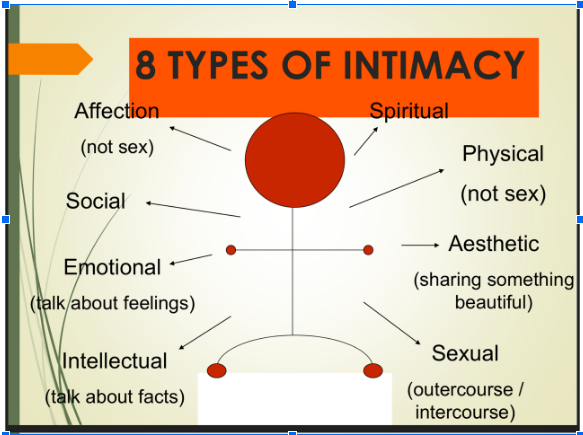
Included is a slide of the 8 Types of Intimacy…..Sex is just one type! So, there are
many ways to know our partner and be intimate together. All of these can be accomplished while we are practicing physical distancing….as long as partners are physically healthy☺

8 types of intimacy, bull city psychotherapy

Emotionally Focused Couples Therapy at BCP’s New Apex Location

emotion focused therapy bull city psychotherapy

Are you feeling disconnected from your partner and find yourselves getting into the same pattern of conflict that never seems to get resolved? Perhaps you feel lonely or discounted, or maybe it’s as if you can just never get it right with your partner no matter how hard you try. If so, you’re not alone. All couples experience conflict to some degree, but what determines if it’s productive conflict or not is whether you get resolution and feel closer afterward or drift even further apart.

Emotionally Focused Therapy for couples, or EFT for short, is an approach to couples counseling anchored and validated in 35 years of research and we are excited to offer it at our Durham and new Apex office locations. EFT helps couples get underneath their dysfunctional patterns of communication, or “cycle” as it’s called in EFT, to facilitate a more safe and secure bond. A common example of this cycle is when a resentful partner yells, complains, or attacks verbally. In response, the other tries to “keep the peace”, close off, keep b

usy and otherwise avoid the anger. This pattern can go round and round for years distancing partners and creating a sense of detachment, resentment and loneliness.

EFT is rooted in Attachment theory which explains that we are creatures of connection. Having a safe and trusting connection with a primary partner is fundamental to our emotional and physical well-being. Knowing that another “has our back” and is our safety net allows us to feel secure in the world so that we can most effectively engage in society, achieve our goals, and form safe and healthy connections with others.

Your EFT therapist can help you understand your cycle, make sense of it, and get underneath the anger and resentment so that you each feel heard and understood. EFT can help you move from a place of perpetual blaming and defensiveness to love and empathy and help you rediscover the love you once had. The exciting part of EFT couples counseling is that your level of distress is not a predictor of success. Often, heightened conflict is present because partners care so much and the fear of losing the other feels intolerable. We are excited to offer this couples modality to our community both in Durham and Apex. Evening and weekend appointments are available.

You can learn more about our experienced EFT therapist, Alison Sanderson, LCMHC, on this website or email her directly for an appointment at alison@bullcitypsychotherapy.com. She can see you in Durham or Apex. Saturday appointments are available at the Apex location.

Reframing Goal Setting in Your 2020 Vision

Happy New Year Everyone! I believe that 2020 can be a successful year for us all! ‘How can she have such high aspirations?’ you might be asking yourself…..Well, it’s because I have a sure way that each of us can accomplish parts, if not, all of our entire goals for 2020.

The secret to goal achievement is in creating mini goals specifically directed at our long-term goals.

The way that I do this is to ‘dream’ where I want to take my life, then I back up and envision the ideal path that I need to take to get there. My dreams become a version of my goals and my visioning path become my mini goals.

This has been such an effective plan for me that regardless of the overall outcome, if I am achieving some of my mini goals, positive movement forward is still happening. So, even if I don’t ever achieve my final dream goal, I am making significant headway in my life’s overall dream direction, and I am still making positive changes, moving forward, feeling accomplished and gaining confidence, etc. Also, if I do attain my dream goal, then it’s a win-win, because not only am I fulfilling a dream, I have also made several improvements along the way that will likely effect me positively in several areas of my life.

Let’s look at a simple example. One of my goals this year is to shave off 4-5 points from my golf handicap. This is all fine and good,however it is doomed for an epic fail, if I do not clearly define the path I need to follow in order to reduce my handicap.

So, my next step is to create a path, or mini goals, to my long-term goal. In this case, I decide that if I put a golf club in my hands at least twice a week, then that will help me achieve my goal. So, putting a golf club in my hand twice a week is now my focus. I can either go to the driving range, practice chipping in my back yard, or putt inside my house. This little mini goal is probably something I can fit into my schedule. My hope is that this mini goal will transfer into my long-term goal several months from now, and my handicap will decline.

And, another way I make this work for me is that practicing golf is also being added to my Focused Self-Care Plan. What is a Focused Self-Care Plan? A FSCP is a plan that includes everything I need to do in order to show up in this life as My Best Self. The way I create a FSCP is to have the non-negotiables at the beginning of the plan, then towards the end I add things like hobbies or activities that help me feel contented in my ‘inner child’ self, which helps me feel happy in my adult ‘real’ life. So, for my golf goal, I can actually add golf at the end of my self care plan as a hobby that helps me stay centered in the overall balance of my life.

Here’s to a healthy, safe, and focused 2020!

The Power of Original Grief

original grief

Original grief that is not processed can be a powerful force that keeps us locked in negative thinking patterns. Conversely, the awareness of our original grief can be the key that unlocks the path to move through our grief, so we can live unburdened by the pain of the past and in the fullness of the present moment.

First, it would be helpful to share a common definition of original grief.

Original grief is our deepest feeling of intense sadness due to the most significant loss we experienced, usually in childhood. ©

Original grief presents differently for everyone, but there are a few commonalities to look for when trying to identify your original grief. First, look to your childhood and make a list of the pain and/or rejection you can recall. For instance, trauma, abuse, abandonment, fear, the witnessing of others in the aforementioned situations, not feeling loved, safe, or important, and growing up with other circumstances of dysfunction such as addiction or mental illness, can all create a very deep sense of original grief. Those are examples of the more overt types of the origins of grief. However, original grief can also be born in seemingly functional families, where emotions may not have been fully expressed or modeled, relationships may have been surface oriented and lacked authenticity, or physical affection was not common in the family. All of these examples of childhood experiences can create a sense of original grief. Obvious trauma and abuse, quiet neglect and emotional inhibition can all result in a child growing up to feel, ‘I am not OK as I am’ or ‘It’s my fault’, which can be how original grief ‘sounds’ in our minds.

When we feel original grief as children, it usually creates very negative self talk that can lead to various unhealthy thought patterns.. This self talk can be very quiet and become internalized, especially if it starts when we are young. If we have negative habitual thought patterns , it is easy to see how we will likely make negative choices and also likely feel negative feelings, such as anger, sadness, loneliness, shame, etc. As we get older, if our original grief has not been identified and processed, there are some common ways we can respond, some examples are anxiety, depression, addiction, codependency, or repeating what we were taught.

The significance of original grief can remain unnoticed for many years. This is called grief denial. Plenty of adults can recall their original grief and believe that just because they are still alive and moving forward, they ‘beat’ their childhood experience, and ‘it’s not going to hold me back’. Sometimes adults even become the opposite of their family of origin as a way to prove to themselves that ‘I am ok’.  Also, sometimes adults remain in denial by telling themselves, ‘things were not so bad’, or ‘They did the best they could’.  However it sounds, grief denial can keep us stuck, never truly healing, or feeling worthy.

Conversely, when we become consciously aware of our original grief, we can then do the hard work of digging deep and truly understanding how our experience affected us, then feel and heal the old wounds that hold us captive in the ways we responded. This deep work is not about blaming our parents or caregivers, nor is it about making excuses for our choices, rather this deep work is all about healing and moving forward in a authentic and fully conscious manner. Original grief is a layer under trauma. After trauma is reprocessed, original grief is still there to feel, process, and move through. If original grief remains unprocessed, it can reactivate trauma, so this is an important step in the healing process. For example, the little child who was abused must receive effective trauma treatment at some point. Then, when there are no more symptoms of trauma, the specific original grief can be identified, felt, processed, and moved through. In this instance, the original grief of trauma might be the loss of a safe childhood. This knowledge of a safe and innocent childhood being stolen away can be utilized as a powerful tool in the overall healing process. The processing of original grief can be the work that frees us from habitual negative self talk and repeating unhealthy behaviors.

To find out more about Original Grief© contact Dr. Sophia Caudle at Sophia@bullcitypsychotherapy.com.