


In recovery, especially the early stages of recovery, we have to work very, very hard. We can not let up at all, and it reminds me of the strength and persistence a bull has when he is trying to kick a bull rider off his back….the bull is working overtime to remove the weight that is making him feel unhappy, agitated, unsettled, and even angry. I’m wondering if that sounds like anyone who has worked in early recovery from an addiction or from recovering from a relationship. Yes, early recovery can feel very unpleasant at times, and it takes some time before we genuinely feel the authentic benefit of our hard work. However, the good news is that the harder we work at the beginning, the stronger the recovery foundation we have, and our recovery begins to build on itself and become this wondrous feeling of new-true self. Remembering the bull analogy, if we are strong, persistent, even bull-headed, about our recovery, and make it our number one priority, especially in early recovery, the long term benefits are great, and our relationships become better and healthier. So, if you are in recovery from anything….addiction, relationships, ambiguous grief, try making yourself and your Self Care Plan a priority, and do Recovery, Like a Bull.

What is the one thing you want for your kids? The single most important thing you want to instill in them? The collective answers may vary some, but most parents would agree that, more than anything, we want to raise people that have the ability to be happy and healthy. We want them to be able to create the lives they desire, to bounce back from adversity – we want them to have grit. And let’s be honest – we want to be gritty too.
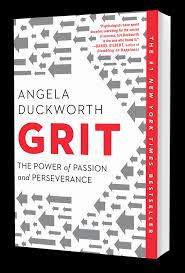
The term “grit” has been around a long time, but recently it has been defined in such a way as to be academically measured and researched. Dr. Angela Duckworth has pioneered this work via her research in the Positive Psychology Center at the University of Pennsylvania. She defines grit as “the passion and perseverance for long-term goals.” She has studied grit in the context of West Point Cadets, world-class musicians and athletes, and K-12 students of all backgrounds. While the field is evolving, the work thus far is important and academically sound. It’s very cool stuff. You can learn more here: https://ppc.sas.upenn.edu/people/angela-duckworth
For the sake of this post, I want to focus on how we grow grit. Dr. Duckworth posits that, “If we want our children to have a shot at a productive and satisfying life, we adults should make it our concern to provide them with the two things all children deserve: challenges to exceed what they were able to do yesterday and the support that makes that growth possible.”
It boils down to challenges and support. We need to experience age-appropriate challenges. And we need to feel the feeling of gradually and regularly overcoming those challenges. We need to know what it feels like to practice something that is hard, and then feel it become a little easier the next day. We need to develop a growth mindset – where failure is a cue to try a different way, rather than a cue to get frustrated and give up. We cultivate these good habits in an environment where we are supported to try things, fail, and try again.
As an individual, be someone who seeks these experiences. Try, fail, smile, and try again. As a parent, partner, or friend, be someone who cultivates these experiences for others. Provide your children with age-appropriate challenges. Help them know what focused practice feels like. Help them learn that failure is a cue to try again. Challenge is healthy when we are supported to grow through it. These skills we learn in childhood serve us well our entire lives.
I strongly encourage you to read the book itself, because there are so many important considerations about these principles and how they apply to our lives. You can learn more here: http://angeladuckworth.com/
ACTIONABLE NEXT STEPS:
Think of a challenge that is age-appropriate for your kiddo (or yourself) like practicing piano, soccer, spelling, yoga, Spanish, etc.
Work with them to commit to practicing that challenge for an appropriate amount of time. (Here are examples to start with. Tweak as you see fit.)
Ages 5-8 = 10mins/day; 3 days/week for 2 months
Ages 8-10 = 30mins/day; 3 days/week for 6 months
Ages 10-14 = 1hr/day; 3 days/week for 9 months
Ages 15-18 = 1hr/day; 3 days/week for a year or more
When it gets hard, provide the support they need to stick with it.
When they feel a difficult task getting easier, celebrate that progress!
When they’ve mastered the task or goal, pick another one and do it again.
Go forth! Try! Fail! Try again! Practice! Support your people through adversity! Be gritty and get grittier!


Quick hits:
Like so many processes of the mind grief is filled with nuance.
There’s no right way or timeline to grieve. Some folks feel their grief has been processed in a matter of days. For others it can take years. There are those who may take years before they can really begin to grieve. All of these timelines are legitimate, valid, and understandable.
This spectrum of experience with grief can make it a challenging topic to study and discuss. I won’t purport to have it all figured out. In my experience there are very few reliable do’s and don’ts that work for most people. For every practice I’ve seen help someone, I could think of someone who found the opposite to be helpful.
That said, here are some guidelines that I have seen do the most good for the most folks. Whether it’s you, or someone you love, understanding these three ideas may help with the grieving process.
1.Give yourself the space and grace to do what you need.
Grief is personal. Listen to what your body, mind, heart, and gut are telling you. Maybe you need a day off. Maybe you need to stay busy. Of course there could be negative consequences for over-indulging in any one behavior – like isolating too much or staying too busy for too long so as to suppress and neglect your process. But I have observed that tapping in to this self-awareness can be very good for us and helpful in your process. Be intentional about checking in with yourself. Spend some time reflecting on what you need in order to honor your grief and your process. Listen to yourself. Grief is personal.
2. Try not to judge yourself.
You’ve been through something that warrants grief. This process will be challenging enough. Try not to judge yourself for not grieving right. Feeling things like, “should I be feeling more than this?” or “why am I taking this so hard?” can be counterproductive. If you do find yourself doing this, try to give yourself some grace and space to relax and acknowledge the feelings as part of your process.
Dr. Brené Brown tackles this idea of judgment as it relates to grief in her book Rising Strong. She uses some relatable examples to help us understand that our capacity for compassion, for ourselves and others, is not finite and does not take away from our other abilities.
Brene Brown, Rising Strong p. 8-9
Comparative suffering is a function of fear and scarcity. Fear and scarcity immediately trigger comparison. My husband died and that grief is worse than your grief over an empty nest. I’m not allowed to feel disappointed about being passed over for a promotion when my friend just found out that his wife has cancer. You’re feeling shame for forgetting your son’s school play? Please – that is a first world problem. There are people dying of starvation every minute.
The opposite of scarcity is not abundance; the opposite of scarcity is simply enough. Empathy is not a pizza with eight slices. When you practice empathy and compassion with someone, there is not less of these qualities to go around. There’s more.
Love is the last thing we need to ration in this world.
The refugee in Syria doesn’t benefit more if you conserve your kindness only for her and withhold it from your neighbor who is struggling through a divorce. Yes, perspective is critical. But I’m a firm believer that complaining is okay as long as we piss and moan with a little perspective. Hurt is hurt, and every time we honor our own struggle and the struggles of others by responding with empathy and compassion, the healing that results affects all of us.”
3.Talk to someone!
Yes – reflective time alone with your thoughts or with your higher power can be helpful. However, prolonged isolation is almost always unhealthy. Grief is part of the human experience. It is meant to be shared. Your pain may be unique, but you are not alone. Others have walked a similar path, and others are willing to walk with you. Find people in your life to lean on, and if they’re not available, then reach out to a counselor. They will provide a safe place to be your partner through this difficult time. You don’t need fixed. You’re not broken. What we need when we’re grieving is for someone to sit in the pain with us until it lessens a little bit. Your pain is real, and healing through it is a process. Progress happens when you share it.
Lastly, as complex as it is, we do have a substantial amount of research and resources available related to grief. For a nice summary of the stages of grief and loss, as popularly defined by Dr. Elisabeth Kubler-Ross, as well as resources related to grief, here is a helpful site:
http://grief.com/the-five-stages-of-grief/
All the best to you as you make your progress,
Matt
To schedule an appointment with Matt, please call the office at (919) 382-0288 or Matt’s direct line is (919) 794-5490, or email at matt@bullcitypsychotherapy.com.

Do you ever respond to something in a way that confuses people? For example, maybe you’re watching a movie and there is a scene where someone is trapped in a tight space and you need to close your eyes while the rest of the folks in the room can just keep watching. Or maybe you have a big reaction to clowns. Maybe even reading the last two sentences was enough to increase your heart rate. If so – you are not alone.
Lots of us have strong reactions to things that pose no immediate threat. Frequently we’ll refer to these things as our “triggers” because they can trigger such a quick and negative response. Small spaces and clowns are common ones, but there are many, many more.
Our brains are so complex that they can trap just about any memory in a way that we could find triggering. I’ll discuss maladaptive memory networks and trauma responses in a different post. But for now, I wanted to make you all aware of a resource that can help with your triggers that relate to movies and tv shows. The website “www.doesthedogdie.com” currently tracks 57 different triggers including but not limited to “is there self-harm?” “are there spiders?” “does someone die by suicide?” “is there hate speech?” and many more. They track the presence of these triggers in movies, tv shows, books, and video games. You can check the website prior to viewing something to see if your trigger will come up.
This is a great resource to help you avoid triggers and enjoy some leisure time activities. Also keep in mind that we have highly effective therapies that can help you conquer these triggers once and for all. At Bull City Psychotherapy and wellness, we have excellent clinicians trained in EMDR, CBT, acupuncture and more who can help you make your triggers a thing of the past. Reach out to us at 919-382-0288 or https://


Quick Hits:
Parts of this post are written to the parent of an anxious child, however the information is consistent for adults with anxiety as well.
Does any of this sound familiar? Sweaty palms, heart racing, flushed skin, tantrums, black and white thinking, decisions we regret – these and so many more are common symptoms of anxiety.
Before we tackle the problem of anxiety I think it is helpful to define it. While anxiety can take many different shapes, I like to think of it like this:
Anxiety is our response to perceived threat.
We all perceive threats differently. What is threatening, or anxiety provoking, to someone else may not even register on your anxiety meter. One child may be terrified when being dropped off at school while another one can’t wait to get there. Regardless of the details of the perceived threat, we can all relate to feeling anxious at one time or another. Anxiety is a universally human experience.
It is the way we think about these perceived threats that determines how we deal with our anxiety. It can be helpful to think of your anxiety level in 3 zones – green, yellow, and red.
Green zone – you’re feeling good. Even if you are aware of a perceived threat, you feel in control and ready to handle it in a healthy way.
Yellow zone – you’re ok, but worried. You are aware of a perceived threat, but not sure you can deal with what is coming. This is the time to fall back and rely on your anxiety management skills.
Red zone – you are not feeling good. Your anxiety level has reached a point where rational thinking and using skills is no longer an option. Black and white thinking has taken over. From here we need to find a way to safely ride out the storm until we’re back in the yellow zone and we can use our skills.
The bad news: Anxiety is a tricky opponent. It affects different people in different ways. We don’t know everything there is to know about it yet, but we do know certain things.
The good news: One of the most important things we know is that the main cause of anxiety is NOT YOU! Let me say this again – you are not the cause of your child’s (or your own) anxiety. It is not your fault.
We do know that certain factors make it more likely for a child to experience issues dealing with anxiety. There are some genetic indicators, and there are some environmental indicators that studies show may increase a person’s likelihood of experiencing issues, but there is no reliably predictable cause. So, if you have been beating yourself up, thinking you caused the issues you are dealing with, you can stop that right now.
More good news: we know how to fix it! We have developed and studied a technique that is effective for over 80% of people dealing with issues related to anxiety! It’s called cognitive behavioral therapy (CBT). Basically, CBT helps us take control of our thoughts and feelings before we act in ways we regret. The basic idea is that thoughts lead to emotions and emotions lead to actions. We can practice and develop skills that allow us to interrupt our natural thoughts and/or emotions so they don’t lead us to actions that we regret.
Here’s an example. A child who has never practiced CBT skills may be anxious about being dropped off at school. They may have thoughts about being left alone, getting hurt, their parents getting hurt and not coming back to get them, or any other perceived threat. These thoughts lead to negative emotions like fear. Their body starts to react by increasing the heart-rate and responding to the perceived threat. Black and white thinking takes over. They are in the red zone and rational thought cannot occur. The action they take is to scream, cry, throw a tantrum, and do whatever it takes to protect themselves from the threat – at this point it’s essentially a fight, flight, or freeze response.
The same child, after practicing and developing CBT skills, is able to recognize when they are in the yellow zone. They recognize this feeling as a trigger to fall back on and use their skills. Their skills help them think about what is most likely to happen and that they are actually very safe at school. They even enjoy the time with their friends and teachers when they’re not in the red zone. Using their skills, they get themselves back to the green zone and do not behave in a way that they regret.
This is a very simple way of looking at CBT, but the principles are sound. CBT is the gold standard in behavior modification and anxiety spectrum issues. Medications can help, but many folks can realize wonderful results without them if they take the time to develop and practice their skills. And the best part is, the skills stay with us for a lifetime.
CBT focuses on realistic thinking skills to improve thoughts, awareness and relaxation skills to improve our emotional responses, and controlled exposure to triggering events to improve behaviors.
When should I reach out for help?
A licensed clinician can help you cultivate CBT skills in a matter of weeks. It is a great idea to reach out for help if you or your child:
There are more FAQs below, but I’d like to leave you with a quick summary.
It is very likely that you did not cause the anxiety that you or your child are experiencing. It is also very likely that you can “fix” it! You can learn and develop the skills to overcome the anxiety that is getting in the way of you living your fullest life. If you are frustrated with how things have been going, reach out to a licensed clinician and ask about a CBT plan. You can do this! I suspect you will find that the experience is less scary, less difficult, more effective and more common than you think. By practicing CBT skills, most children and adults alike come to know they are much braver and more capable than they think they are.
All the best to you as you make your progress,
Matt
Frequently Asked Questions about Anxiety:
How long does it take?
Of course the details vary, but most folks see progress in 4-6 weeks and consider their first round of work complete in 10-15 weeks. At that point, they are able to practice the skills they’ve learned in their day to day life. Some folks come back to their clinician for check-ups periodically or continue regular work when they uncover new behaviors they’d like to improve.
When is it fixed?
A person might consider the problem “fixed” when their symptoms decrease to a tolerable or non-existent level. However, the skills learned in CBT are meant to be used throughout our lives. If they are neglected and forgotten, the problems are likely to return.
What if my child is gifted?
There is some correlation between intellectual aptitude and anxiety issues. CBT is very effective with folks in these situations.
What if the child is resistant?
This is very common. Whether it’s the stigma associated with seeking help or the fact that talking about anxiety can increase a person’s anxiety – some folks are hesitant to working with a counselor. The truth is that no one can make progress without effort. So, they need to want to make improvements in order to do the necessary work to see results. However, there are techniques that help people stay in touch with their motivation and keep them coming back. Rewards and reinforcement can also be used at age-appropriate levels.
What about repetitive behaviors?
This is another sign that it is time to talk with a licensed clinician. Repetitive behaviors can be signs of other issues. They can also be improved by similar strategies – including building CBT skills and tapping into a person’s true motivation. The earlier one seeks treatment for these issues, the better.
What about siblings?
All of us are part of family systems to one degree or another. So none of our behaviors exist in isolation. Siblings can play a huge role in making symptoms better or worse. One of the many wonderful things about CBT skills is that they can benefit the entire family. If there is a dynamic with your child’s sibling(s) that is impacting their progress, you definitely want to bring that to the attention of your counselor.
How do I know what’s normal?
If you suspect that your child’s behavior may be outside of normal/typical range, you should seek the opinion of a licensed professional – this could be a counselor, pediatrician, or social worker. They will be able to help you decide what your next steps should be.
What do I do about test anxiety?
This is one of the most common triggers for anxiety in children. It also typically responds very well to treatment. Building CBT skills around reality checking, pre-test routines, and positive self-talk typically go a long way to relieving these symptoms.
Could it be manipulation instead of anxiety?
If, for example, throwing a tantrum gets the child what they want, then it is possible they have learned to manipulate their environment by using behaviors that are similar to those experiencing anxiety. It is important to be honest and consistent about the child’s behavior and your responses in order to know the truth about what is happening. A licensed clinician will be able to help you to know what to look for and what your next steps should be. Typically if the behavior becomes dangerous or is limiting their productivity or relationships, then it is more than manipulation. Either way, your clinician will be able to help you practice strategies for improvement.
To schedule an appointment with Matt, please call the office at (919) 382-0288 or Matt’s direct line is (919) 794-5490, or email at matt@bullcitypsychotherapy.com.

What brought you to this place? It may or may not be the first question that your therapist will ask you, but it is a revealing question that you might ask yourself. What brought you to the place of being ready to begin working on your sex addiction? What brought you to the place of being ready to schedule that appointment, whereas in the past something always held you back or got in the way? Was it getting caught, or was it totaling up the money you have spent on porn or prostitutes? Was it an ultimatum from your partner, or was it the fatigue you have felt from hours of acting out? Was it the fear that this addiction would be your ultimate undoing, or was it the fear that you might lose your children’s respect? My goal is not to shame you, but to help you see that the answer to that question can be a helpful tool.
What brought you to this place? Whatever brought you here—to this critical moment in your life—can also be empowering and encouraging. When you are in a moment of weakness and you are not sure if you want to continue working on your recovery, remember what brought you here. Sobriety is not just about giving up something, but also about gaining something. The impetus that gave you the courage and determination to begin the journey can also propel you forward toward a better life.
What brought you to this place? Sex addiction is ultimately an intimacy disorder. Perhaps in your childhood, your caregivers were not so adept at being there for you, or even worse, were abusive. You did not connect with them in a healthy way, and now you struggle to form the attachments with others that you need. A fear of intimacy permeates your life. You use sexual activity or pornography as substitutes for healthy relationships. Your “drug of choice” becomes a brain-numbing replacement. As Robert Weiss, the sex addiction expert writes, “Sex addicts are looking for controllable sources of getting themselves fed emotionally.” Perhaps you struggle with engaging in the kind of transparency, risk, and vulnerability that lead to secure attachments in your relationships.
What brought you to this place? Whatever your answer to that question may be, let it be the springboard to putting every ounce of your determination into moving forward. Let it impel you to do whatever it takes to find a life that is nurturing, healthy, and whole. You cannot do everything at once. Just take the first step. Give us a call. Any one of us at Bull City Psychotherapy would be honored to work with you as we examine that crucial question together.
If you would like to schedule an appointment with Tim, please call him at 919-533-7907. Or you can e-mail him at tim@bullcitypsychotherapy.com.

For many, the holidays and the start of a new year can be a joyous time. For others, the start of a new year can be a reminder of what we have lost or what we have never had.
For those of us who feel ambiguous grief during the holidays, here are some tips you can incorporate into your day that will truly transform how to perceive your life. For starters, it is so important that we first identify and even write down our blessings or parts of our life that we feel much gratitude for. I like identifying at least three things I feel grateful for as I am settling in to practice mindfulness meditation. I do this in a very self aware and intentional manner, with full attention and imagery in my mind for what or who I am grateful for. Other people like to keep a daily gratitude journal. This is also extremely helpful. The process of writing down what we are grateful for really solidifies the authenticity of feeling grateful for something specific. And others like to fill a jar or box with gratitudes and periodically read them for an emotional boost and reality check when we are feeling down.
I also think it is critical that we allow time and space to actually feel the feelings of ambiguous grief that we may not want to feel. If we have lost someone who is still living, or we are mourning something we never had, such as a loving relationship with a parent, then we need to honor our feelings and allow them to be felt, rather than pushing them away or numbing out with addictions or other distracting behaviors.
For me, I use certain time during my mindfulness practice to be devoted to feeling ALL of the feelings I need to feel, especially the ones that I don’t want to feel. When I do this, my feelings of ambiguous grief do not torment me as much in my daily life at work or with family. I give myself the gift of feeling my true feelings without judgment. There are many other ways you might find work for you to feel your true feelings; possibly with a trusted friend, or a counselor, journal writing, etc.; these are all great, just find what works best for you.
In the end, just because a new year is starting does not mean our feelings of ambiguous grief are simply going to disappear. Grief is a feeling that needs to be honored, processed, and felt. There is no time frame for grief. Grief can also turn into complicated grief or depression, so if you are stuck, then please seek professional help. If you are, however, honoring your true feelings and working through the ambiguous grief, then you are not stuck, you are successfully feeling the hard work of processing grief.
Ambiguous grief may come and go, especially if the person your mourn is still alive, and you see him or her. Anytime we experience loss or negative feelings, our underlying feelings of ambiguous grief can be triggered, and if this happens it is perfectly normal. When you notice you are triggered, practice the tools that work for you, such as creating a gratitude list or calling a trusted friend to share.

If you are experiencing ambiguous grief and you would like to schedule an individual intensive with Dr. Caudle, please email her at Sophia@bullcitypsychotherapy.com.
Ambiguous grief intensives focus on identifying, processing, and moving through grief with experiential work and research based therapies.

Do you view or have urges to view pornography featuring children or teens? Do you experience shame or isolation related to these urges or behaviors? Do you worry that you may be tempted to commit a sexual act against a child or teen? If you are considering seeking treatment, you may find yourself asking some of the following questions:
Why do I do this?
Traditionally, compulsion to consume pornographic images featuring children and teens, and pedophilia in general, has been viewed as a moral failing for which the only remedy is long-term incarceration and/or community ostracism. This approach assumes that the individual chooses to access the content and does not wish to stop. We now know that this perspective is not only inaccurate, but also dangerous in that it offers no hope for those who hope to avoid offending. Most convicted child pornography offenders report they WANTED to stop the behavior, but felt powerless against their compulsions. The pain associated with this powerlessness is immense and sometimes deadly. In fact, research shows that people who struggle with these unwanted urges die by suicide at significantly higher rates than the general population.
Newer research has identified a number of factors that increase the likelihood that an individual will develop a sexual attraction to children or a compulsion to view child pornography. These factors include experiencing sexual abuse as a child, neurological or developmental disorders, learning disabilities, poor problem-solving skills, and even biological conditions such as brain tumors. Some individuals become addicted to adult pornography and are gradually introduced to sexualized images of children. In these instances, child pornography is an escalation of pornography addiction, in part because of the taboo against it.
While we do not currently have a thorough understanding of why these compulsions develop, researchers are continually revealing information to assist mental health providers and sufferers with reducing risk of harm and improving quality of life. Regardless of the causes of one’s sexual attraction to children and teens, it is the responsibility of the individual to seek treatment in order to reduce risks to themselves and their community.
Will treatment work? Am I doomed to commit and act of sexual violence against a child or teen?
There is a pervasive myth in American culture that pedophiles and consumers of child pornography do not benefit from treatment. Current research supports the notion that treatment can help sufferers reduce their unwanted behaviors and urges as well as improve their mental well-being.
Not everyone who is attracted to children becomes a sex offender. In fact, there are vast online and real-life communities of individuals who choose to tackle their sexual attraction to children through treatment and support structures, versus risk harming a child. To learn more about these communities and to read personal stories about recovery, visit https://www.virped.org/
Is it safe for me to talk to a therapist about this?
The fear of being judged or reported to the authorities keeps many sufferers from seeking the treatment they need. While laws vary from state to state, in North Carolina, psychotherapists are not mandated to report clients who disclose viewing of child pornography. In fact, our professional licenses require us to maintain the privacy and confidentiality of our clients, with the following exceptions:
If you seek treatment outside of North Carolina, take the time to familiarize yourself with the legal statutes surrounding mandated reporting by mental health professionals. Alternatively, you can always contact a local provider directly to ask about mandated reporting requirements before disclosing any specific information.
What will treatment look like?
Treatment typically involves reducing risk factors including stress, social isolation, and substance abuse, as well as developing healthy outlets for intense emotions. You may spend time in treatment addressing traumatic experiences in your past or exploring unhelpful patterns in thoughts and behaviors. Your therapist may refer you to a medical provider to explore pharmacological interventions (drugs to reduce symptoms of PTSD, OCD, or other contributing conditions or to reduce intensity of sexual urges).
What do I do next?
If you live in or near the Durham NC area, Bull City Psychotherapy offers services for individuals who have not committed “hands-on” offenses against children but are seeking help to stop viewing child pornography.
At Bull City Psychotherapy, we specialize in the treatment of sexual disorders, including pedophilia (for non-offenders) and sex or pornography addiction. We understand that seeking treatment takes courage and we strive to provide our clients with the respectful and compassionate treatment they deserve.

To schedule an appointment with Lara, please call the office at (919) 382-0288 or her direct line at (919) 884-7836, or email at Lara@bullcitypsychotherapy.com.
Lara is a Licensed Clinical Social Worker (LCSW) specializing in working with clients who struggle with unwanted behaviors and compulsions, including pornography and/or sex addiction, pedophilia, and self-harm. Lara is also trained and experienced in trauma work. Lara’s approach is heavily influenced by her training in Dialectical Behavior Therapy (DBT), which teaches clients how to fully experience their emotions and manage behaviors through coping skills.